Module 1 in pilot production
AI Security Fundamentals
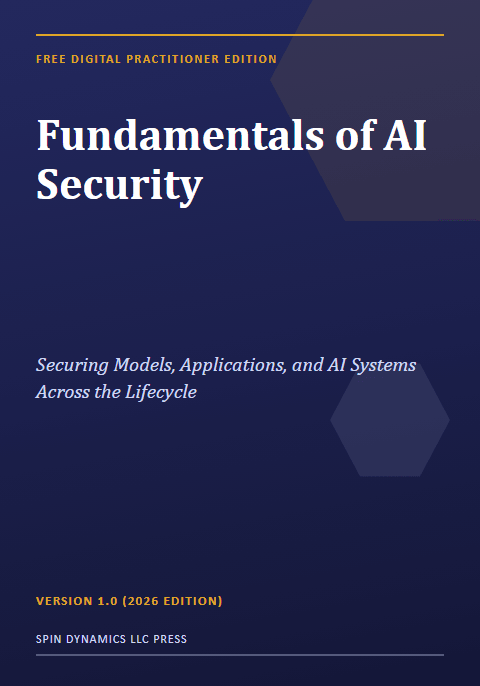
Securing models, applications, and AI systems across the lifecycle.
24 modules · Foundation to advanced · from Fundamentals of AI Security
AI security courses built chapter by chapter from three practitioner books: a fundamentals textbook, an enterprise strategy and leadership framework, and a Copilot Studio governance guide.
Every track is built from a book written for practitioners, so the curriculum is already structured, referenced, and reviewed. Pick the track that matches your role.
Securing models, applications, and AI systems across the lifecycle.
24 modules · Foundation to advanced · from Fundamentals of AI Security
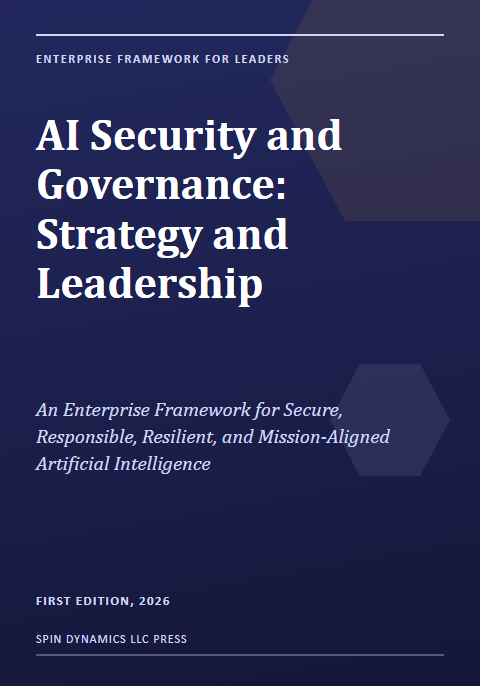
An enterprise framework for secure, responsible, resilient, and mission-aligned AI.
22 modules · Executive and program leadership · from AI Security and Governance: Strategy and Leadership
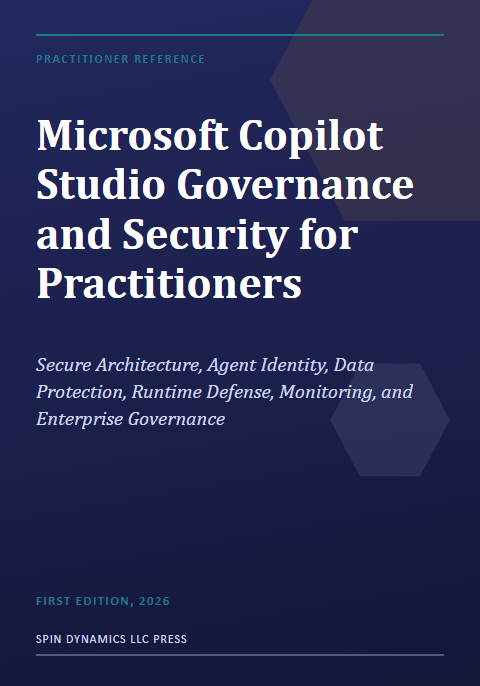
Secure architecture, agent identity, data protection, runtime defense, monitoring, and enterprise governance for Copilot Studio agents.
15 modules · Practitioner, platform-specific · from Microsoft Copilot Studio Governance and Security for Practitioners
The same production standard applies to every module: a chapter becomes short videos, a lab package, and a knowledge check, each with captions, transcripts, rubrics, and a quality check.
Each module follows a chapter of the source book, so its learning objectives, figures, and references are already written and reviewed.
Two or three videos of 8 to 13 minutes each, with captions and a clean transcript, built from the chapter and its figures.
Guided exercises with an orientation video, learner instructions, an evidence template, and a completion rubric. Labs run locally or on free public practice targets, and only against systems you are authorized to test.
Single-best-answer questions mapped to the chapter's objectives, with an answer key that explains every option. Passing score 80%.
The first module of the Fundamentals track is the pilot for the whole program.
Status. Pilot. Scripts, lab packages, and the knowledge check are complete and awaiting recording.
Learned behavior, three security facts, and AI as a socio-technical system. about 11 min.
System layers, trust boundaries, and the difference between attack, misuse, and failure. about 12 min.
Six defensive functions, lifecycle-aligned controls, and turning security claims into evidence. about 10 min.
30 minutes, browser only. A guided first look at a public prompt-injection practice target, with an evidence template and completion rubric.
45 minutes, runs locally on synthetic data. Shows why the same input can produce different outputs and what seeds and versions prove.
Seven single-best-answer questions mapped to the chapter's seven learning objectives. Passing score 80%. Answer key with rationales and an LMS import file are included.